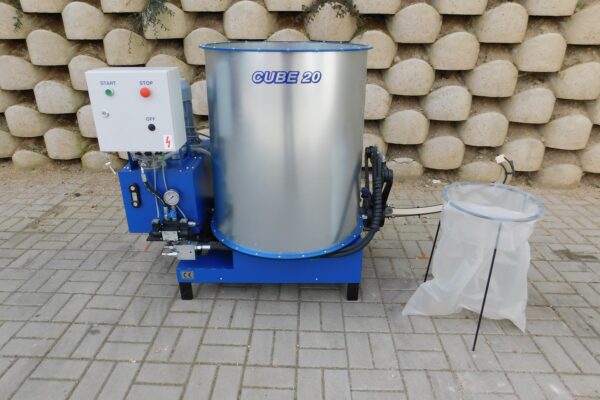
Falach
Falach 20 Briquette Machine
- Output 10–25 kg/hr
- Briquette 30 × 30 × 30 mm cube
- Power use 1.1 kW
From £8,480 + VAT
To choose a briquette machine, weigh how much dry waste you make each week, divide it by the hours the press will run, and pick a model that handles that figure comfortably. Then check your power supply, floor space, moisture content and materials.
Everything starts here. Weigh a full extraction bag, count how many you fill in a normal week, and multiply. If you use skips, note the skip size, how often it goes and what you pay. Do this over two or three weeks if your work varies.
Divide your weekly waste in kg by the hours the press will run. A press that runs alongside your machines for a 40-hour week needs a lower rating than one that only runs on Friday afternoons.
Example: 1,000 kg a week ÷ 40 hours = 25 kg per hour. That points to the Falach 30 (25–35 kg/hour) or Falach 35 (30–40 kg/hour). Leave some headroom. A press working at the top of its range all day leaves no margin for busy weeks or harder material.
| Model | Output | Supply | Price |
|---|---|---|---|
| Falach 20 | 10–25 kg/hr | 3-phase, 16A (single-phase version available) | From £8,480 + VAT |
| Falach 20XL | 10–25 kg/hr | 3-phase, 16A (single-phase option available) | From £8,980 + VAT |
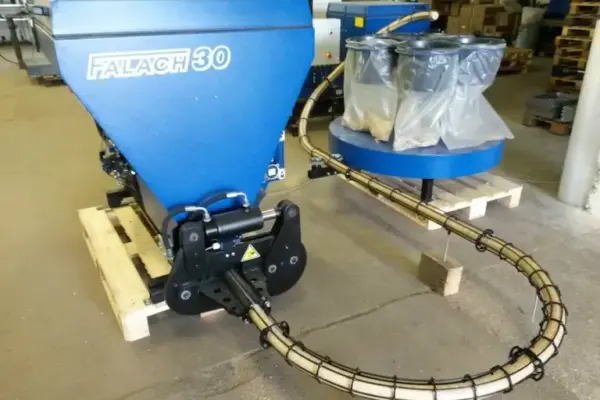
| Falach 30 | 25–35 kg/hour | 3-phase, 16 amp | From £9,980 + VAT |
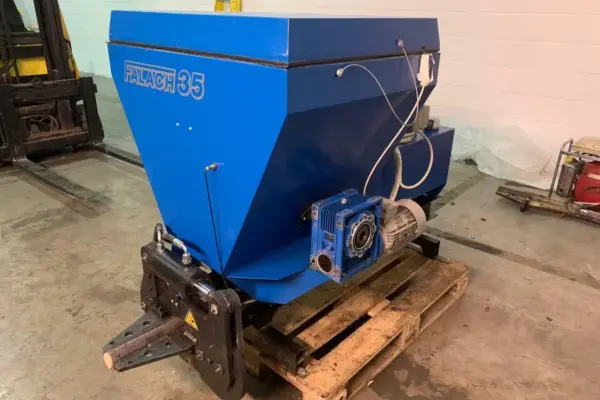
| Falach 35 | 30–40 kg/hour | 3-phase, 16A | From £10,980 + VAT |
| BrikStar EK 20 | 10–30 kg/hr | 400 V, three-phase | From £11,500 + VAT |
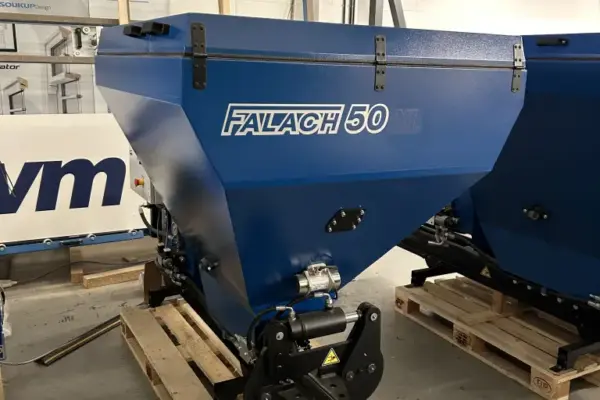
| Falach 50 | 40–60 kg/hour | 3-phase, 16A | From £12,480 + VAT |
| Falach 50XL | 40–60 kg/hour | 3-phase, 16A | From £13,980 + VAT |
| Falach 70 | 60–80 kg/hour | 3-phase, 32 amp | From £19,980 + VAT |
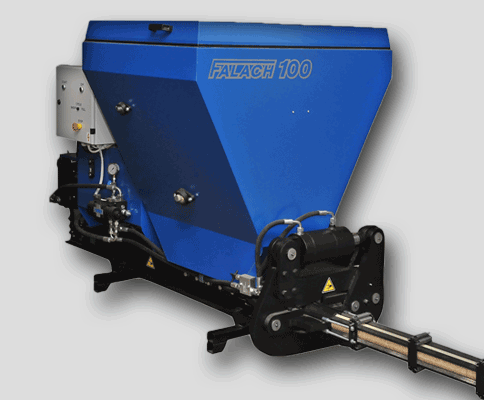
| Falach 100 | 90–120 kg/hour | 3-phase, 32 amp | From £24,980 + VAT |
Check the supply at the spot where the machine will stand, not just at the board.
The Falach 20 and 20XL have the smallest footprint at 1250 × 740 mm. The Falach 30, 35 and 50 are 1860 × 890 mm. The Falach 70 and 100 are 2220 × 1200 mm and weigh over 800 kg. Allow room around the machine to load the hopper, change bags and service it, and check the height if the press sits under a cyclone or chute.
Falach presses list a maximum moisture content of 15%. The Falach 50 lists a maximum chip size of 15 mm. Larger offcuts need a shredder first. See our guides to moisture content and wood chippings.
Softwood, hardwood, MDF and board dust all behave differently. Several Falach models accept MDF. The Falach 70 is listed as Clean Air Strategy compliant for virgin wood only. If your waste includes board or treated timber, read our MDF guide.
An auto reverse agitator stops waste bridging in the hopper, and automatic switch-out stops the press when it runs out of material. The Falach 35, 50, 50XL, 70 and 100 have both. The Falach 30 has neither, so expect to watch it more. An oil cooler (Falach 50, 50XL and 100) helps on long, hard runs.
A bag carousel saves standing over the machine. The Falach Five Bag Carousel fits the Falach 30, 35, 50, 70 and 100. The IWM Six Bag Carousel is made to fit most machines. Store briquettes somewhere dry.
A used or ex-demo machine can cost less, but stock changes and the choice of size is limited. The Falach 35 and 100, for example, list a lead time of 4–6 weeks.
Check the rules before you burn them. Briquettes made from treated, painted or board materials (MDF, chipboard, laminate) are still waste wood, and burning them may need an environmental permit or a registered exemption. Check with the Environment Agency (or SEPA in Scotland, Natural Resources Wales or NIEA in Northern Ireland) and your local authority. Selling wood fuel to households has its own certification rules (Ready to Burn or Woodsure), so check before offering any. We are happy to talk it through with you, but we can’t give you a ruling for your site.
Not sure which machine fits? Send us a sample of your waste or come and see a machine running, or ask IWM on 01636 918280.
Picked by rated output and briquette size. Tick Compare to see them side by side.
Output. Match the press's kg per hour to your weekly waste and the hours it will run. Get that right and most other choices follow.
A little headroom is sensible, so the press isn't flat out every hour. Buying far too big costs more up front and needs a bigger power supply and more space.
The Falach 20 and 20XL at 10–25 kg/hr, with a 1250 × 740 mm footprint. The BrikStar EK 20 is rated 10–30 kg/hr.
Only if you have offcuts or chips larger than the press accepts. The Falach 50, for example, lists a maximum chip size of 15 mm.
Yes. Tell us your waste type and weekly volume, or send a sample, and we will suggest a model.
See what your own waste makes. Send a sample or watch a machine run in Newark.
No hard sell. A straight conversation about the right size of machine for your waste, or whether you need one at all.
We'll ring you back during working hours. Can't wait? Call 01636 918280.