Falach
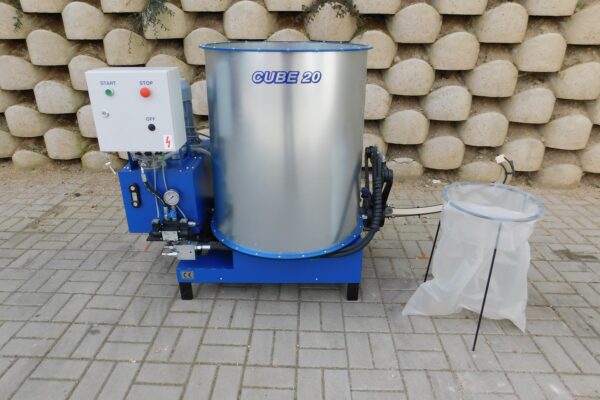
Falach 20 Briquette Machine
- Output 10–25 kg/hr
- Briquette 30 × 30 × 30 mm cube
- Power use 1.1 kW
From £8,480 + VAT
Dry sawdust is one of the easiest wood wastes to briquette. A hydraulic press packs it into dense briquettes with no glue, as long as it is below about 15% moisture. Typically the volume falls several times over, and the briquettes can be burned in a suitable heater or given away.
Yes. Sawdust is fine, even and packs tightly, which is what a briquette press wants. A hydraulic ram pushes the sawdust into a chamber under high pressure. Lignin, the natural binder in wood, softens under that pressure and locks the particles together. Out comes a solid briquette. Nothing is added.
Every Falach press, and the BrikStar EK 20, lists sawdust or dust among its accepted materials.
This is the one that catches people out. Falach presses list a maximum moisture content of 15%. The BrikStar EK 20 works up to about 15% and best below 12%. Above about 15%, the steam and water stop the briquette binding, so it comes out soft or falls apart.
A cheap moisture meter, or a sample sent to us, settles it. Read more in our moisture content guide.
Loose dry sawdust typically weighs around 150–250 kg per cubic metre. A finished briquette from a Falach 20, 20XL or 100 has a density of 900–1,100 kg/m³. Once stacked or bagged, with air gaps between them, the saving is less than that suggests, but the volume still typically falls several times over. For the BrikStar EK, IWM’s figure is that briquetting reduces waste volume by about eight times.
Dry wood briquettes typically hold around 4.5–5 kWh of energy per kg. That is in the same range as good, dry firewood, but in a denser, more even form that stores and stacks well. How much useful heat you get depends on the stove, boiler or heater.
Choose on how much you make. Weigh a full extraction bag, count how many you fill a week, and divide the weekly total by the hours the press will run.
| Model | Output | Power use | Supply | Briquette | Price |
|---|---|---|---|---|---|
| Falach 20 | 10–25 kg/hr | 1.1 kW | 3-phase, 16A (single-phase version available) | 30 × 30 × 30 mm cube | From £8,480 + VAT |
| Falach 30 | 25–35 kg/hour | 2.2 kW | 3-phase, 16 amp | 50 mm diameter | From £9,980 + VAT |
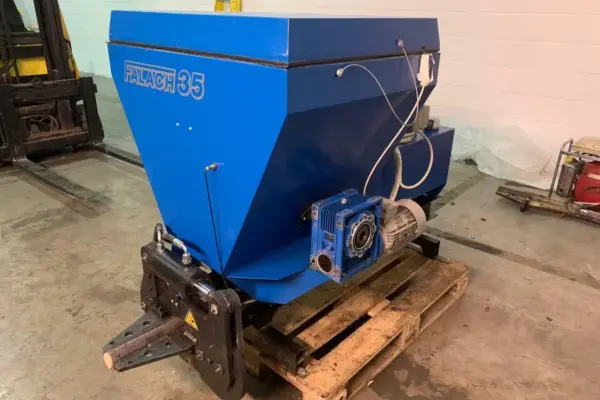
| Falach 35 | 30–40 kg/hour | 2.2 kW | 3-phase, 16A | 50 mm diameter, 35–50 mm long | From £10,980 + VAT |
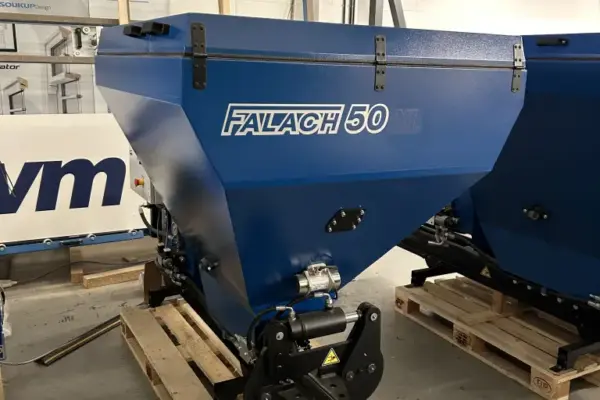
| Falach 50XL | 40–60 kg/hour | 3.8 kW | 3-phase, 16A | 50 mm diameter, 35–50 mm long (adjustable) | From £13,980 + VAT |
| Falach 70 | 60–80 kg/hour | 4.9 kW | 3-phase, 32 amp | 70 mm diameter, 40–60 mm long | From £19,980 + VAT |
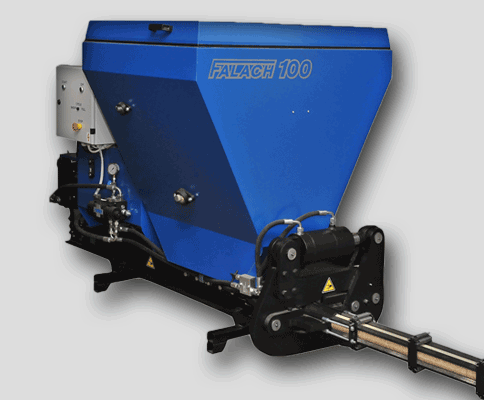
| Falach 100 | 90–120 kg/hour | 8.2 kW | 3-phase, 32 amp | 70 mm diameter, 45 mm long (adjustable) | From £24,980 + VAT |
Skips and collections, giving it away for animal bedding, burning it loose, or selling it. Each has a place. We compare them honestly in what to do with sawdust.
Fine wood dust is a fire risk and, in the air, an explosion risk. It is also a health hazard to breathe. Pressing it into briquettes means less loose dust lying around. Follow HSE guidance on wood dust and keep extraction well maintained.
Check the rules before you burn them. Briquettes made from treated, painted or board materials (MDF, chipboard, laminate) are still waste wood, and burning them may need an environmental permit or a registered exemption. Check with the Environment Agency (or SEPA in Scotland, Natural Resources Wales or NIEA in Northern Ireland) and your local authority. Selling wood fuel to households has its own certification rules (Ready to Burn or Woodsure), so check before offering any. We are happy to talk it through with you, but we can’t give you a ruling for your site.
Not sure which machine fits? Send us a sample of your waste or come and see a machine running, or ask IWM on 01636 918280.
Picked by rated output and briquette size. Tick Compare to see them side by side.
No. A hydraulic press uses pressure alone. Lignin in the wood softens and binds the briquette.
The usual cause is moisture. Above about 15% the briquettes don't bind properly. Particle size and very mixed material can also play a part.
Only once it is dry enough. Green sawdust is usually well over 15% moisture and needs drying first.
Typically around 4.5–5 kWh per kg for dry wood briquettes. Useful heat depends on the appliance.
The Falach 20, rated 10–25 kg/hr, with a 1250 × 740 mm footprint and a single-phase version.
See what your own waste makes. Send a sample or watch a machine run in Newark.
No hard sell. A straight conversation about the right size of machine for your waste, or whether you need one at all.
We'll ring you back during working hours. Can't wait? Call 01636 918280.