Falach
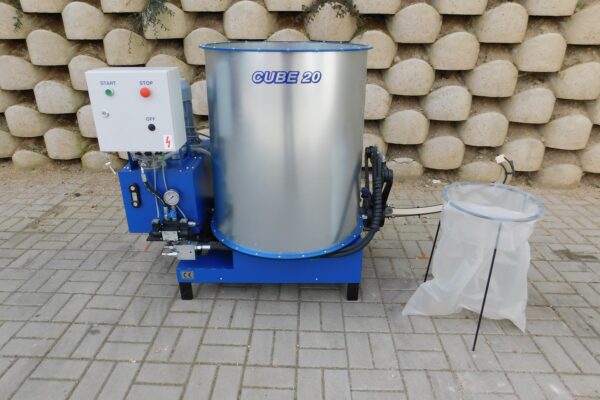
Falach 20 Briquette Machine
- Output 10–25 kg/hr
- Briquette 30 × 30 × 30 mm cube
- Power use 1.1 kW
From £8,480 + VAT
Most briquette machines need a dry waste stream (15% moisture or less), a 3-phase supply (16A for most Falach models, 32A for the largest) and a floor area of 1250 × 740 mm to 2220 × 1200 mm. The answers below cover the rest.
| Model | Supply | Size (L × W × H) | Weight | Noise |
|---|---|---|---|---|
| Falach 20 | 3-phase, 16A (single-phase version available) | 1250 × 740 × 1120 mm | 233 kg | 68 dB |
| Falach 20XL | 3-phase, 16A (single-phase option available) | 1250 × 740 × 1450 mm | 233 kg | 68 dB |
| Falach 30 | 3-phase, 16 amp | 1860 × 890 × 1100 mm | 400 kg | 68 dB |
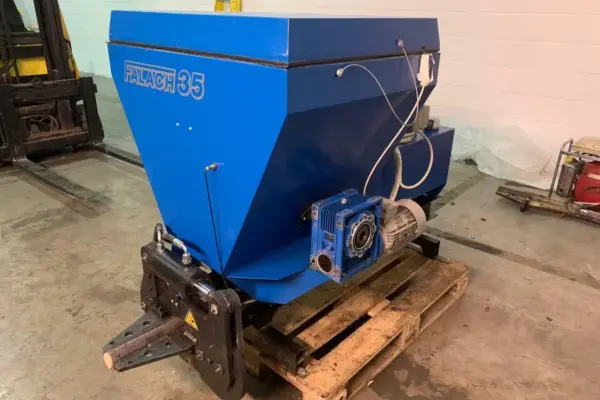
| Falach 35 | 3-phase, 16A | 1860 × 890 × 1100 mm | 400 kg | 68 dB |
| BrikStar EK 20 | 400 V, three-phase | Ask IWM | ~385 kg | ~75 dB |
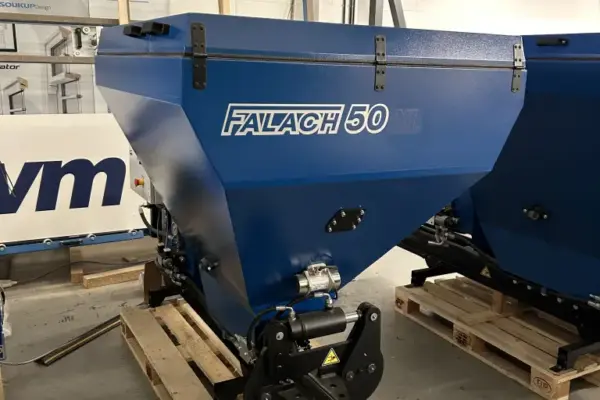
| Falach 50 | 3-phase, 16A | 1860 × 890 × 1100 mm | 390 kg | 68 dB |
| Falach 50XL | 3-phase, 16A | 1960 × 1150 × 1350 mm | 430 kg | 68 dB |
| Falach 70 | 3-phase, 32 amp | 2220 × 1200 × 1510 mm | 840 kg | 68 dB |
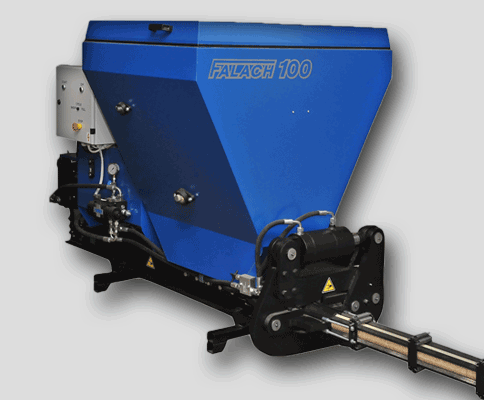
| Falach 100 | 3-phase, 32 amp | 2220 × 1200 × 1510 mm | 810 kg | 62 dB (max, under load) |
The questions below run roughly in order: space and power, running and maintenance, your waste, the briquettes, and buying. If yours isn’t here, ask IWM.
Check the rules before you burn them. Briquettes made from treated, painted or board materials (MDF, chipboard, laminate) are still waste wood, and burning them may need an environmental permit or a registered exemption. Check with the Environment Agency (or SEPA in Scotland, Natural Resources Wales or NIEA in Northern Ireland) and your local authority. Selling wood fuel to households has its own certification rules (Ready to Burn or Woodsure), so check before offering any. We are happy to talk it through with you, but we can’t give you a ruling for your site.
Not sure which machine fits? Send us a sample of your waste or come and see a machine running, or ask IWM on 01636 918280.
Picked by rated output and briquette size. Tick Compare to see them side by side.
The Falach 20 and 20XL are the most compact at 1250 × 740 mm. The Falach 30, 35 and 50 are 1860 × 890 mm, the Falach 50XL is 1960 × 1150 mm, and the Falach 70 and 100 are 2220 × 1200 mm. Allow working room around the machine to load the hopper, change bags and service it.
From 1100 mm (Falach 30, 35 and 50) and 1120 mm (Falach 20) up to 1510 mm (Falach 70 and 100). The Falach 20XL is 1450 mm and the 50XL 1350 mm. Check the height if the press sits under a cyclone, chute or extractor.
The Falach 20 and 20XL weigh 233 kg, the Falach 30 and 35 400 kg, the Falach 50 390 kg and the 50XL 430 kg. The Falach 70 is 840 kg, the Falach 100 810 kg and the used Soukup 60–70 1270 kg. Check your floor loading, especially for the heavier machines.
Most do. The Falach 20, 20XL, 30, 35, 50 and 50XL need 3-phase 16A. The Falach 70, Falach 100 and Soukup 60–70 need 3-phase 32A. The BrikStar EK 20 needs 400 V three-phase.
Yes. The Falach 20 and Falach 20XL are available in single-phase versions. Both are rated 10–25 kg/hr.
It is the current the circuit can safely carry. Smaller presses (Falach 20 to 50XL) run on 3-phase 16A. The Falach 70 and 100 have bigger motors (7.5 kW and 11 kW) and need 3-phase 32 amp. Ask your electrician to check the supply at the spot where the machine will go.
Most Falach models list 68 dB, roughly the level of a normal conversation. The Falach 100 lists 62 dB (max, under load). The BrikStar EK 20 lists about 75 dB, so hearing protection is advisable for long periods close by. In most workshops the press is quieter than the machines making the waste.
Keep the hopper and surroundings clear of build-up, watch the hydraulic oil level and condition, and have the machine serviced. The pressing parts wear over time. Most Falach models have a chromed piston and press chamber. Ask IWM for the service schedule for the model you choose. Servicing and parts come from our own team.
Dry. Falach presses list a maximum moisture content of 15%. The BrikStar EK 20 accepts up to about 15%, and works best below 12%. Above about 15% the briquettes tend to crumble rather than bind.
Fine waste works best. The Falach 50 lists a maximum chip size of 15 mm. Larger offcuts need to go through a shredder first.
The Falach 30, 35, 50, 50XL and 100 list MDF among their accepted materials. The press is only half of it. Burning MDF briquettes may need an environmental permit or a registered exemption. Check with the Environment Agency (or SEPA, NRW or NIEA) and your local authority.
No. Wood contains lignin, a natural binder. Under the pressure of the press, and the heat that pressure creates, it softens and holds the briquette together.
Two things. Use them in a suitable stove, boiler or wood waste heater, instead of fossil heating. Or give them away to staff, neighbours or the community. Either way, less waste goes to skips and landfill. Check the rules first if your waste includes board or treated timber.
Check first. Selling wood fuel to households in the UK has its own certification rules (Ready to Burn or Woodsure), and briquettes made from treated wood or board have extra rules. Check with your environmental regulator and local authority before offering any.
Dry wood briquettes typically hold around 4.5–5 kWh of energy per kg. How much useful heat you get depends on the stove or boiler.
Somewhere dry and under cover, off the floor if possible. Briquettes soak up moisture and will swell and break up if they get wet. Bagged briquettes are easier to stack and move.
The simplest way is a single bag under the outlet. The Falach 20XL comes with a briquette chute and single bag stand. For more output, the Falach Five Bag Carousel fills five 20–25 kg bags in turn, driven by the press. The IWM Six Bag Carousel is top loading and made to fit most machines.
Weigh the waste you make in a week, then divide by the hours the press will run. 600 kg a week over 40 hours is 15 kg per hour, which suits a Falach 20 or 20XL. Allow some headroom for busy weeks.
Often, yes. Many presses are fed from an extractor, cyclone or silo. Plan the layout before you buy. The BrikStar EK 20 must not be connected to a pressurised extraction system or installed outdoors.
Not usually. Models with automatic switch-out (Falach 35, 50, 50XL, 70 and 100) stop when the hopper runs out. The BrikStar EK 20 also stops automatically when the hopper is empty. The Falach 30 has no automatic switch-out, so expect to supervise it more.
New Falach presses run from £8,480 + VAT (Falach 20) to £24,980 + VAT (Falach 100). The BrikStar EK 20 is from £11,500 + VAT. Bag carousels are from £1,480 + VAT. Used machines are priced individually.
Yes, finance can be arranged. Ask about it when you request a quote.
We can deliver, install and train your operators. On some models, such as the Falach 100, installation and commissioning is charged separately. Lead time on models such as the Falach 35 and 100 is normally 4–6 weeks from order.
Yes. Send us a sample of your waste or come and see a machine running, and we will confirm the details.
Used and ex-demo machines can cost less, but you get whatever sizes are in stock. Our reconditioned machines come with a 6 month parts warranty. A new machine lets you pick the exact size. Either way, size it to your waste.
See what your own waste makes. Send a sample or watch a machine run in Newark.
No hard sell. A straight conversation about the right size of machine for your waste, or whether you need one at all.
We'll ring you back during working hours. Can't wait? Call 01636 918280.